Intrusive Thoughts & Rumination: How to Stop Overthinking and Unhook from Loops
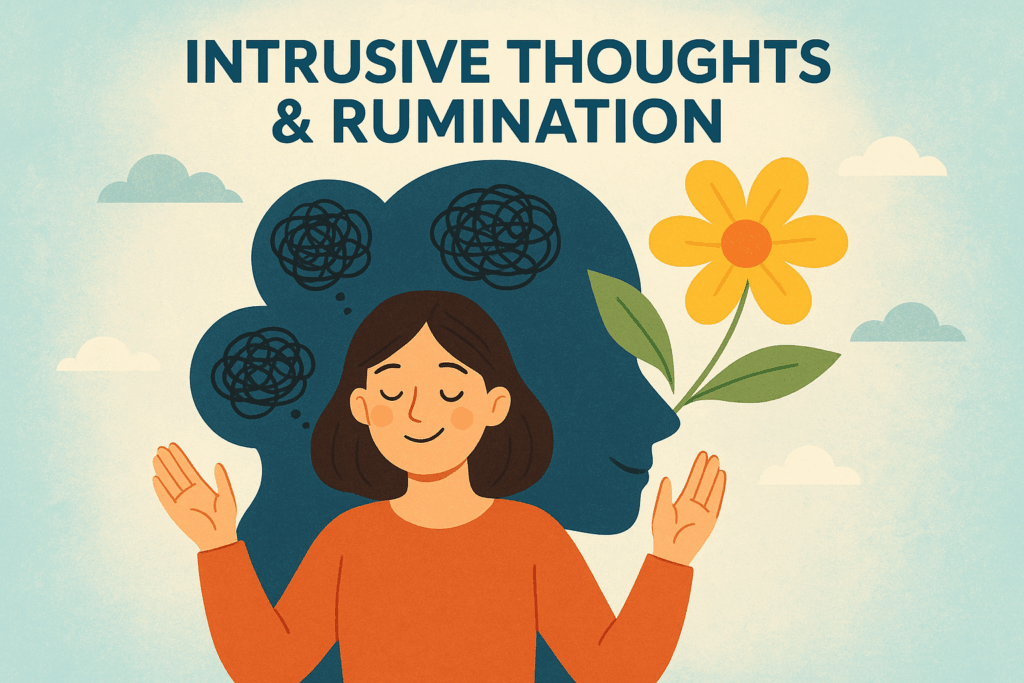
Intrusive thoughts are unwanted images, ideas, or urges; rumination is repetitive overthinking that circles without resolution. When they take over, they drain energy and amplify anxiety. This category offers evidence-based strategies—cognitive defusion, mindfulness, and behavior shifts—to change your relationship with difficult thoughts, reduce their grip, and restore mental clarity. For broader calming and nervous-system regulation, see Anxiety Relief, and to translate insight into small, values-based steps, visit Mindful Actions.
Mental health exercises and practices
Explore practical methods to manage intrusive thoughts and stop rumination: notice thoughts as mental events (not facts), label “overthinking,” and use cognitive defusion (e.g., “I’m having the thought that…”) to create space. Practice mindfulness of thoughts, attention training, and brief grounding to reduce reactivity; distinguish problem-solving from unproductive worry; schedule “worry time” to contain loops; and use behavioral activation to re-engage with meaningful activities. You’ll also find gentle ways to question unhelpful conclusions, reduce reassurance-seeking, and face difficult themes at a manageable pace. For distressing or taboo thoughts, stepwise approaches informed by CBT, ACT, MBCT, and ERP help build tolerance, decrease avoidance, and support clearer, values-aligned action.



Having a thought doesn’t make it true, important, or dangerous. The goal isn’t to eliminate thoughts but to change how you relate to them: notice, name, allow, and gently reorient attention. Small, consistent practice works best—expect ups and downs, and treat setbacks as part of learning. Over time, these evidence-based tools can reduce compulsive mental habits, improve focus and sleep, and free up energy for what matters. If intrusive thoughts or rumination are persistent, lead to compulsions, or cause significant distress, consider connecting with a qualified mental health professional; therapies like CBT, ERP, ACT, and MBCT have strong evidence of effectiveness.
Other exercises and practics category
- Anxiety Relief: How to Calm Anxiety and Regain Control
- Body-Based Practices for Anxiety and Stress Relief
- Breathing Exercises for Anxiety and Stress Relief
- Breathing Exercises for Relaxation: Calm Anxiety and Reduce Stress
- Build Self‑Esteem: How to Improve Self‑Esteem and Confidence
- Deep Relaxation Techniques: Calm the Nervous System and Improve Sleep
- Emotional Intelligence Skills: Manage Emotions, Communicate, Build Empathy
- Intrusive Thoughts & Rumination: How to Stop Overthinking and Unhook from Loops
- Mindful Actions: How to Act with Intention and Reduce Reactivity
- Panic Attack Relief: How to Stop a Panic Attack Safely
- Resilience & Resources
- Self-Discovery: How to Clarify Values, Strengths, and Life Direction
- Self-Observation: How to Build Self-Awareness and Reduce Reactivity
- Stress and Emotion Management: How to Regulate Emotions and Reduce Stress
- Stress Awareness Exercises: How to Recognize Early Signs and Triggers
- Stress Relief: How to Reduce Stress and Restore Calm
- Therapeutic Art Exercises: Art-Based Activities for Stress Relief and Emotional Regulation