Emotional Intelligence Skills: Manage Emotions, Communicate, Build Empathy
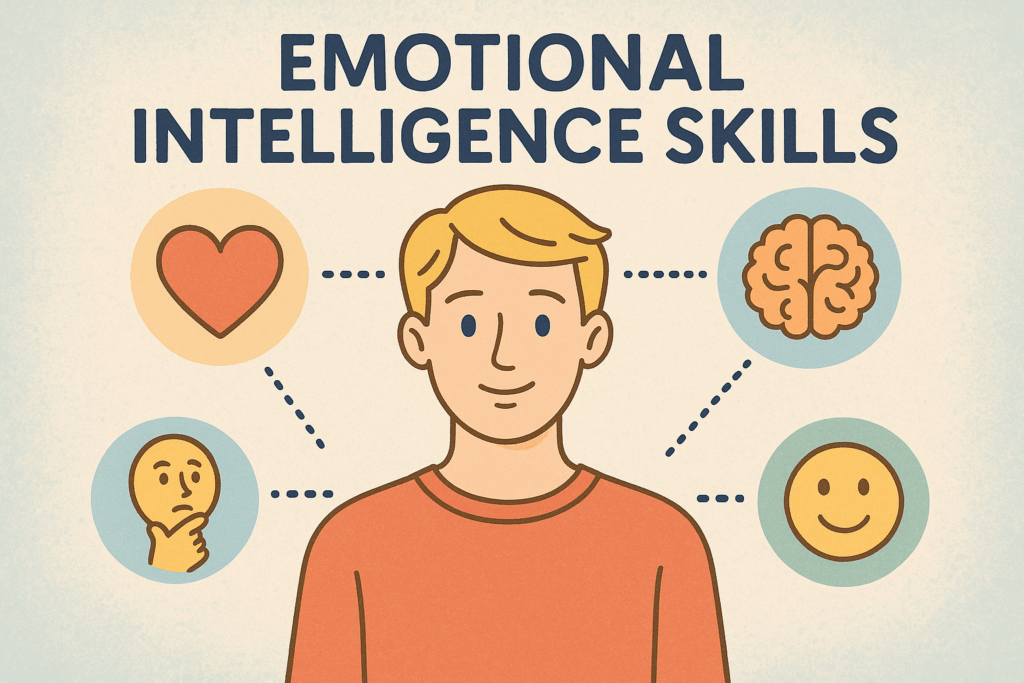
Emotional intelligence is the capacity to notice, understand, and use emotions—your own and others’—to support wellbeing and connection. This category offers evidence-based emotional intelligence skills to build self-awareness, regulate emotions under pressure, and communicate with clarity and care. To strengthen awareness, explore Self-Observation, and to translate insight into daily behavior, visit Mindful Actions.
Mental health exercises and practices
Explore practical emotional intelligence skills to increase emotional awareness, name and differentiate feelings, and recognize patterns, triggers, and needs. Learn emotion regulation strategies that create a pause between urge and response; develop empathy, perspective-taking, and active listening; and practice assertive communication, clear boundaries, and collaborative problem solving. We provide step-by-step guidance, real-life examples, and adaptations for work, study, family, and stressful moments. Each piece focuses on realistic, repeatable habits that improve communication, reduce conflict, and support balanced decisions.
Emotional intelligence grows with practice. Be curious rather than critical: notice what you feel, why it matters, and how you want to respond. Celebrate small wins, repair missteps, and keep aligning actions with your values. Over time, these evidence-based practices can improve relationships, strengthen resilience, and support steadier choices. If emotional difficulties feel persistent or overwhelming, consider reaching out to a qualified mental health professional.