About this practice
Autogenic Training is a structured, self‑guided relaxation practice that uses gentle, inward cues to settle the nervous system and restore balance. Originating with Johannes Heinrich Schultz and later popularized by Herbert Benson’s “relaxation response,” it emphasizes passive attention to natural sensations—heaviness, warmth, calm pulse, easy breathing—to reduce physiological arousal and promote recovery. Research suggests that regular practice can lower stress and anxiety, ease muscle tension, support sleep, and enhance self‑regulation by engaging the parasympathetic (rest‑and‑digest) system. Rather than trying to force relaxation, you allow it to emerge by noticing what is already present and letting it deepen.
Preparation
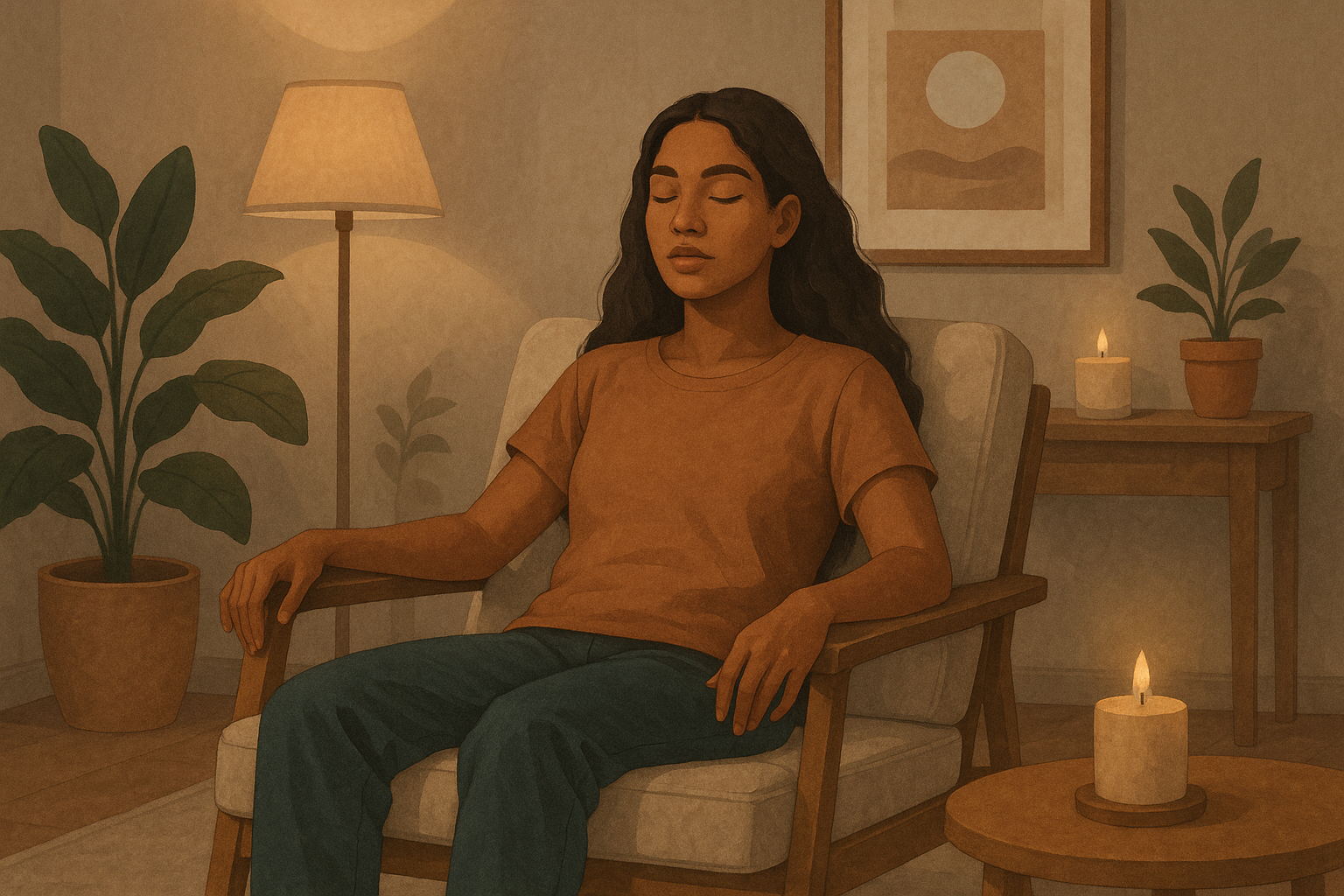
Choose a quiet, comfortable space. Sit upright with relaxed support (or lie down if preferred). Loosen tight clothing. Let your jaw and shoulders soften, hands resting easily. Close your eyes or keep a soft gaze. Remind yourself: “Nothing to achieve—just noticing.”
Core sequence
- Heaviness (muscle relaxation). Place attention on the real weight of your limbs—forearms resting, hands heavy. Silently note “my arms and legs are heavy.” Allow gravity to do the work. If attention drifts, gently return.
- Warmth (circulation). Notice natural warmth in the hands or feet. Invite it with the phrase “my arms and legs are warm.” There is nothing to push; simply register subtle changes as vessels dilate and muscles soften.
- Heartbeat (calm pulse). Sense a steady, comfortable pulse—perhaps in the chest, wrists, or fingers. Silently affirm “my heartbeat is calm and regular.” Rest your attention in this rhythm for a few breaths.
- Breathing (easy and natural). Feel the breath breathing itself—quiet, unforced, through the nose if possible. Note “my breath is calm; it breathes itself.” Let exhales lengthen slightly if it feels natural.
- Abdominal warmth (solar plexus). Shift awareness to the upper abdomen. Imagine gentle warmth spreading in the belly, supporting digestive rest and a sense of ease. You might think “warmth in my center.”
- Cool forehead (clear mind). Sense a light coolness across the forehead, temples, or around the eyes—like fresh air on the skin. Silently note “my forehead is cool; my mind is clear.”
Pacing and progression
Spend 20–40 seconds with each theme and repeat the sequence for 5–15 minutes. Keep your stance passive and curious; let sensations be as they are. Over time, the feelings of heaviness and warmth often arise more readily and spread on their own. Practice once or twice daily, ideally away from heavy meals.
Exit protocol When you’re ready to close, bring awareness back to the room. Gently make fists, feel the strength in your hands and arms. Inhale and stretch lightly, lift your gaze, then exhale and open your eyes. Take a moment to notice how you feel before standing.
Practice with Care
Comfort and safety come first. If you notice dizziness, pain, shortness of breath, or strong discomfort, open your eyes, breathe naturally, and reorient to your surroundings. Those with cardiovascular conditions, significant blood pressure issues, or medical concerns should consult a clinician before intensive relaxation practices. Do not practice while driving or in situations requiring alertness. With regular, gentle repetition, Autogenic Training can support stress relief, better sleep, and steadier emotional regulation by teaching your body how to downshift on cue.