About this practice
5-4-3-2-1 Grounding is a quick, portable practice that uses the five senses to interrupt spirals of anxiety, panic, and rumination. By shifting attention from internal threat cues to concrete sensory details, you engage the brain’s orienting response, reduce cognitive load, and help the nervous system settle. This approach is widely used in CBT-, DBT-, and trauma‑informed care to restore a sense of safety and presence. It can be done discreetly almost anywhere and adapted to your environment and needs.
Instructions
Settle and orient. Stand or sit with a steady base. Soften your shoulders and jaw. Take one longer, gentle exhale and look around the room to locate yourself in the present.
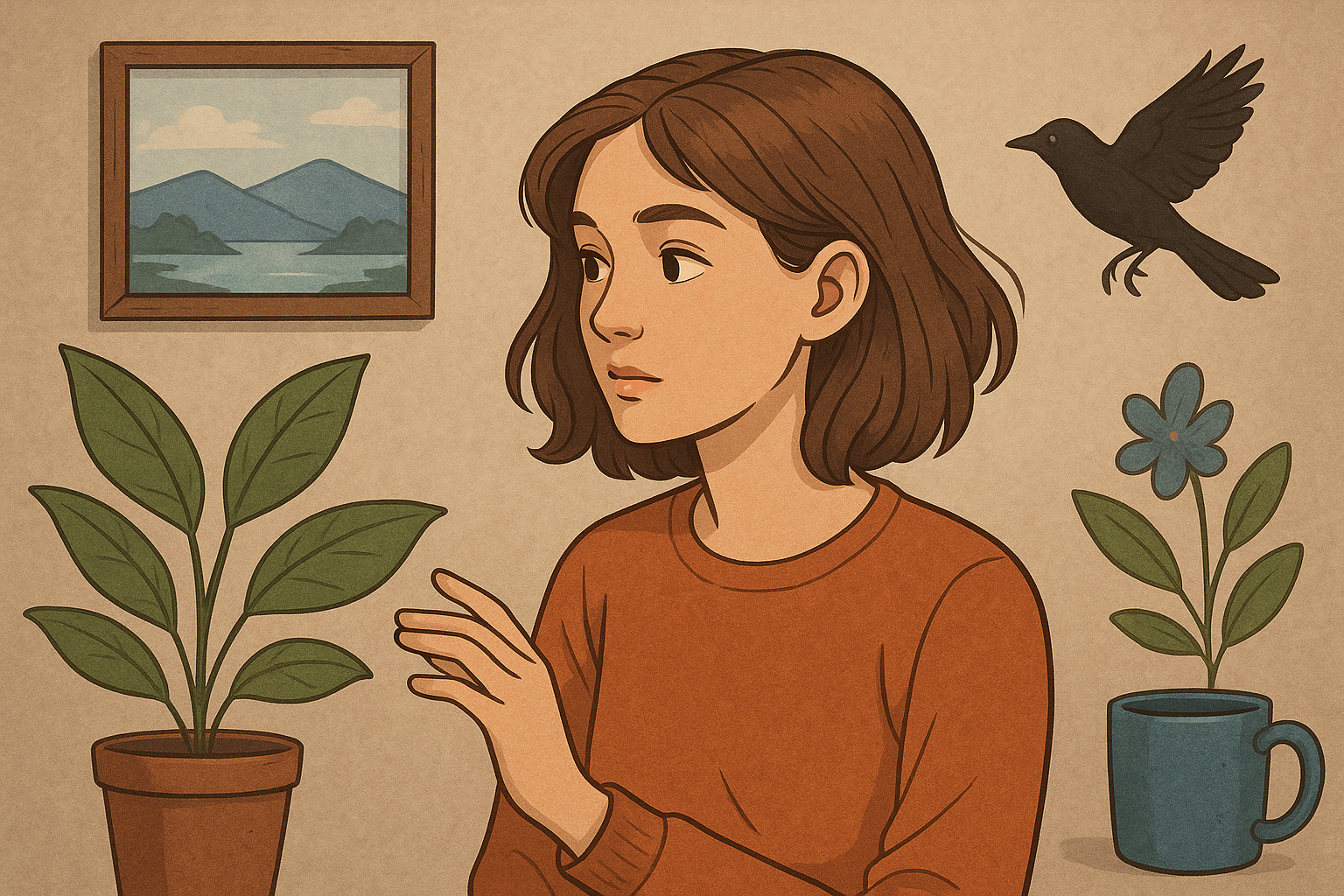
- Name 5 things you can see. Slowly scan your surroundings and label five visual details—objects, colors, shapes, light and shadow. Say them silently or softly.
- Name 4 sounds you can hear. Listen for four layers of sound, from nearest to farthest—your breath, clothing rustle, building noises, outdoor sounds, even “quiet.”
- Name 3 touch sensations. Notice three physical sensations—feet on the floor, clothing on skin, chair support, temperature, air on the face. You may also lightly touch nearby objects.
- Name 2 smells. Identify two scents in your environment (soap, coffee, paper, air). If none are obvious, bring a wrist, sleeve, or personal item to the nose, or recall a familiar scent.
- Name 1 taste. Notice the neutral taste in your mouth, sip water, chew gum, or imagine a flavor and describe it.
Optional supports. If a sense is unavailable or uncomfortable, swap the order or choose different counts. Add a steady out‑breath between steps to enhance calm.
Close and choose a next step. Recheck your body posture, take one unhurried exhale, and ask, “What would help by 10–20% right now?” Pick one small action or return to your day.
Practice with Care
The goal is to re‑anchor attention, not to force relaxation or perfection. If a step feels triggering or overwhelming, skip it or widen focus to sight and touch. Keep eyes open and stay oriented if you’re prone to dissociation. If distress escalates, pause, ground through the feet and a longer exhale, and seek support. This practice complements, not replaces, professional care. Used regularly, it can reduce reactivity, ease panic spikes, and build reliable, in‑the‑moment coping.