About this practice
The Body Scan is a gentle, structured practice that guides your attention across the body, helping you notice sensations with curiosity rather than judgment. Research on mindfulness-based programs (such as MBSR) shows that regular body-focused awareness can reduce stress, improve sleep quality, ease muscle tension, and support emotion regulation by strengthening interoceptive awareness and engaging the parasympathetic nervous system. This practice can be done lying down or seated, in short sessions for a quick reset or longer periods for deeper relaxation and grounding. Over time, many people report a steadier mood, clearer focus, and a more compassionate connection with their bodies.
Instructions
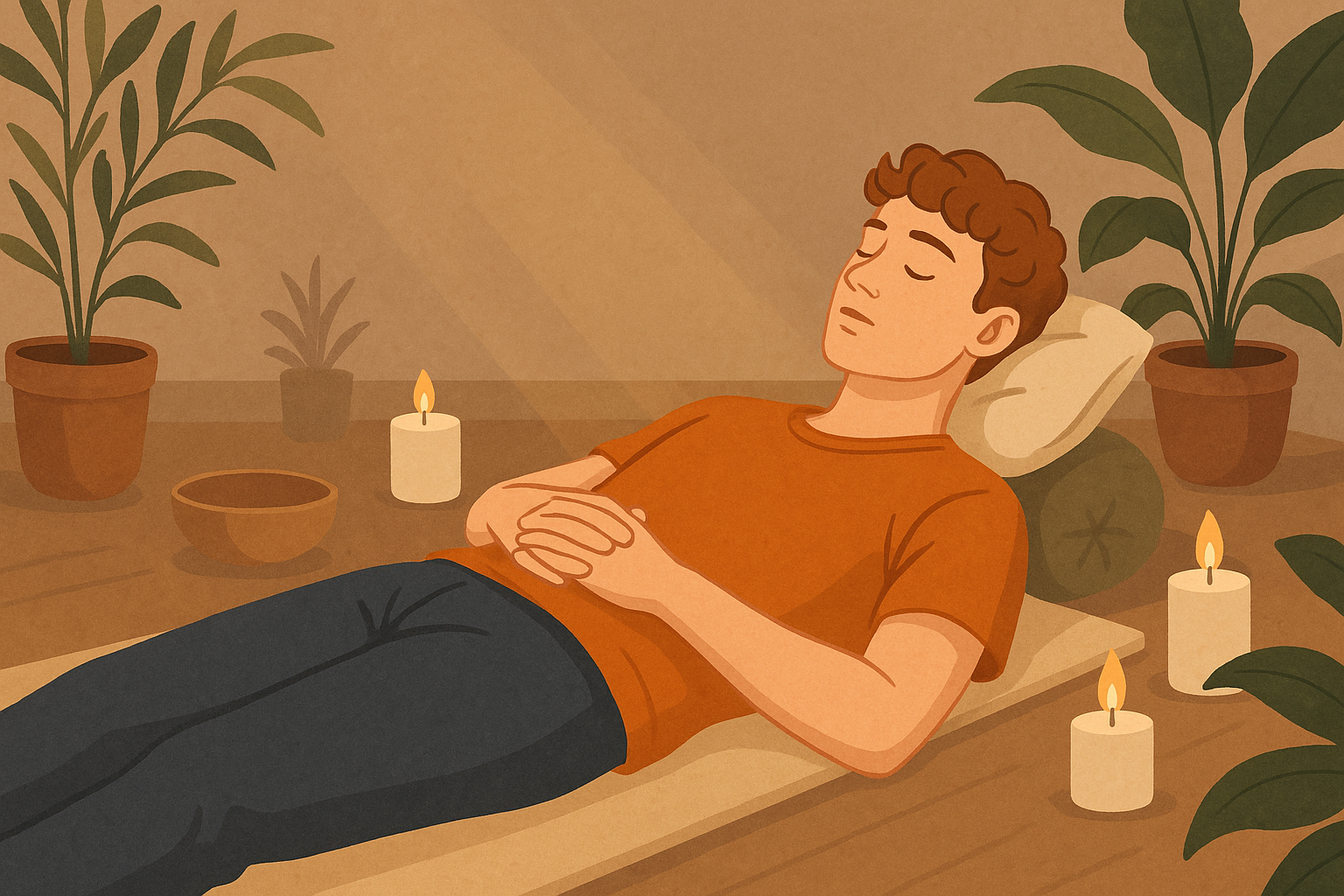
- Settle your position. Choose a quiet, warm space. Lie on your back or sit upright with support. Let your body feel held by the surface beneath you. Close your eyes or keep a soft gaze.
- Set an intention. Remind yourself: “I am practicing noticing sensations. Nothing to fix; I’m meeting whatever is here with kindness.”
- Find an anchor. Feel the natural rise and fall of your belly or the contact points (heels, hips, back, or seat). Let the breath be easy and unforced.
- Start with the feet and toes. Notice sensations in the toes and soles—warmth, coolness, pressure, tingling, or even “nothing.” Name what you find without trying to change it.
- Move through the lower legs. Explore ankles, shins, calves, and Achilles. Sense skin and deeper tissues. If attention wanders, gently return to this area.
- Knees, thighs, and hips. Sweep awareness through kneecaps and backs of knees, then fronts and backs of thighs, hips, pelvis, and glutes. Allow any softening on the exhale.
- Abdomen and lower back. Notice breath movement in the belly and the spread of the lower back. Meet tightness with curiosity; there’s nothing you need to force.
- Chest, upper back, and shoulders. Sense the ribcage, heartbeat, and shoulder girdle. If you detect bracing, invite a longer, slower exhale and let the shoulders settle.
- Arms and hands. From fingertips to palms, wrists, forearms, elbows, and upper arms—observe weight, temperature, and contact. Let the hands rest.
- Neck, face, and head. Scan the throat, jaw, mouth, cheeks, ears, eyes, forehead, and scalp. Soften the jaw and brow on the exhale.
- Whole-body awareness. Sense the body as one field—many changing sensations within a single, breathing whole. Rest here for a few breaths.
- If distractions arise. Minds wander—that’s normal. Briefly label “thinking,” “planning,” or “worry,” then return to the body area you were exploring. If a strong sensation appears, approach it in small doses; if it feels overwhelming, widen attention to the room, open your eyes, and ground in sight and sound.
- Close the practice. Take one slow breath, feel your contact with the surface, and gently wiggle fingers and toes. If helpful, name one word for how you feel (“calmer,” “present,” “softening”) and continue with your day.
Practice with Care
Comfort and curiosity matter more than intensity. If lying down makes you sleepy, try a seated position. If pain or strong emotion arises, scale your attention: take shorter visits to the area, include the breath, or return to external anchors (feet on the floor, sounds in the room). This practice supports stress relief and emotional regulation but is not a medical treatment; adapt as needed and consult a qualified professional if you have concerns. With regular, gentle repetition—even 5–15 minutes—you can reduce tension, improve sleep, and build steady, mindful body awareness.