About this practice
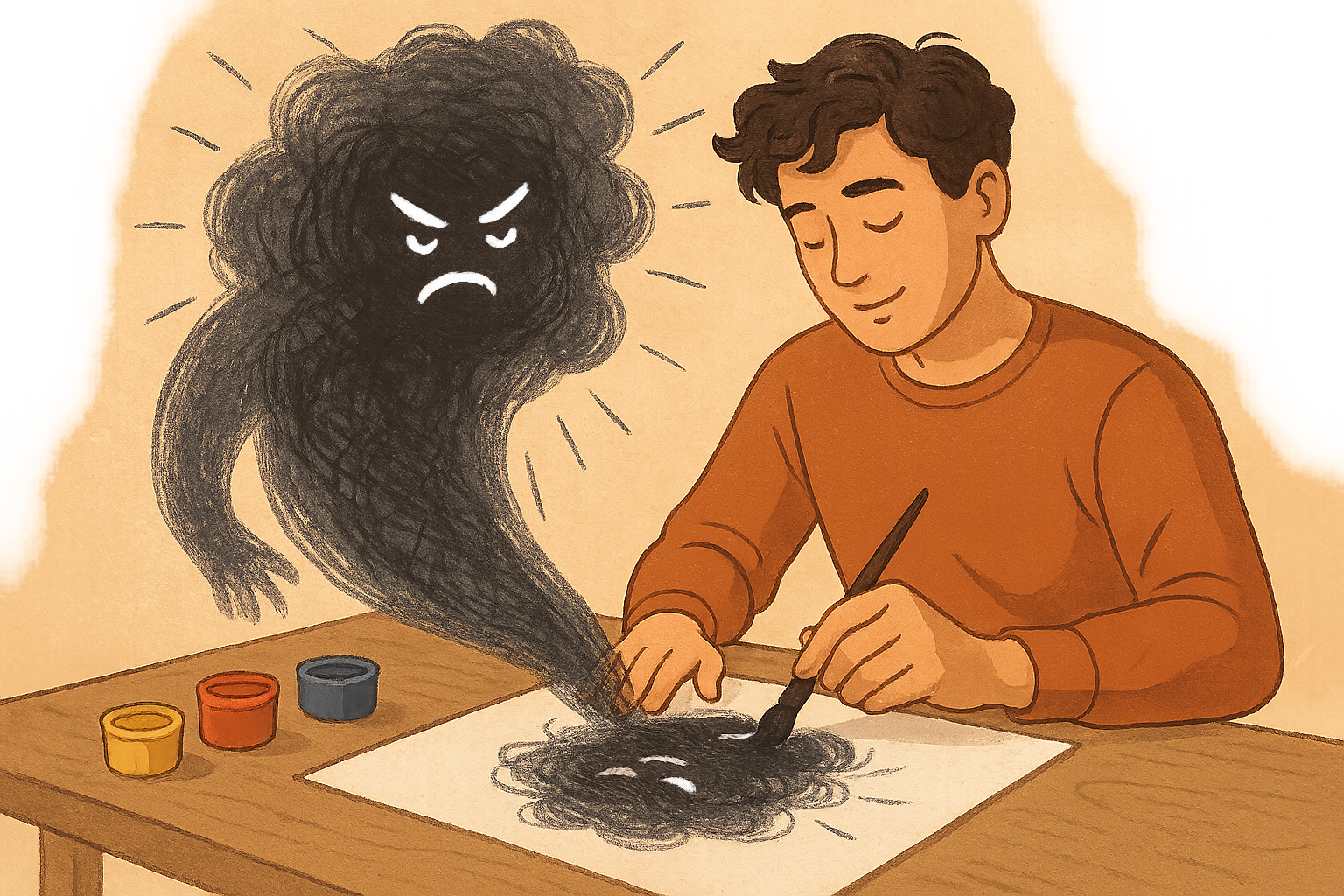
Therapeutic Art Exercises can help you notice stress clearly and respond with care. “My Stress” is a brief, art‑based reflection that turns the experience of stress into images on a page—so you can see triggers, early signs, and patterns in one place. Research suggests that labeling emotions, using visual metaphors, and practicing self‑distancing can reduce distress, improve emotion regulation, and support mindful awareness. In this Stress Awareness Exercise, you’ll give your stress a shape, explore what feeds it, and identify personal “markers” (bodily sensations, thoughts, and behaviors) that signal it’s rising—creating a compassionate snapshot you can learn from.
Instructions — Stress Awareness Exercise steps
- Prepare. Sit comfortably with paper and simple drawing tools. Set a timer for about 10 minutes. Take a steady breath and title the page “My Stress.”
- Imagine. Picture your stress as colors, shapes, lines, or textures. Is it heavy or light, sharp or diffuse, still or moving? How close is it to you? Are you in the scene, and if so, where?
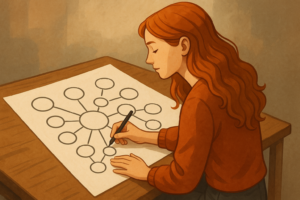
- Draw. Put what you imagine on the page. Keep it simple—stick figures and abstract forms are welcome. Focus on capturing the feeling, not making “good art.”
- Add what feeds it. Around the main image, sketch or note factors that tend to increase your stress—situations, people, thoughts (“shoulds,” “what ifs”), environments (noise, clutter), or habits (overworking, skipping breaks).
- Mark early signs. Note the personal markers that tell you stress is rising: body (tight jaw, racing heart, shallow breath), mind (tunnel vision, self‑criticism), behavior (snacking, scrolling, snapping). Place brief labels near the drawing.
- Reflect. Step back and consider: What is your relationship with this stress—fighting, avoiding, carrying, negotiating? Who takes up more space—you or the stress? What tends to be the outcome of this relationship?
- Choose one supportive step. Based on what you see, name one small action for today (a five‑minute pause, a boundary, asking for help, a brief walk, a breathing check‑in) and one early sign you’ll watch for this week.
Practice with Care
There is no right way to picture stress—let process guide you. If strong emotions arise, pause, look around the room, feel your feet on the floor, and breathe slowly. You can simplify by using fewer elements or softer colors. These Therapeutic Art Exercises are self‑guided and not a substitute for professional care or art therapy. If stress feels persistent or unmanageable, consider reaching out to a licensed mental health professional or credentialed art therapist.