About this practice
Dive Reflex Reset is a brief, science-informed practice that uses safe face cooling to quickly lower emotional and physiological arousal. When very cold water contacts the areas around the eyes and cheeks—especially with a short, gentle breath hold—it activates the mammalian dive response via the trigeminal and vagus nerves. This reflex can slow heart rate, shift the nervous system toward a parasympathetic (rest-and-digest) state, and ease acute waves of anxiety, panic, or anger. It works fast but briefly, so it’s most helpful as a rapid reset before you choose your next supportive step (grounding, paced breathing, problem-solving).
Instructions
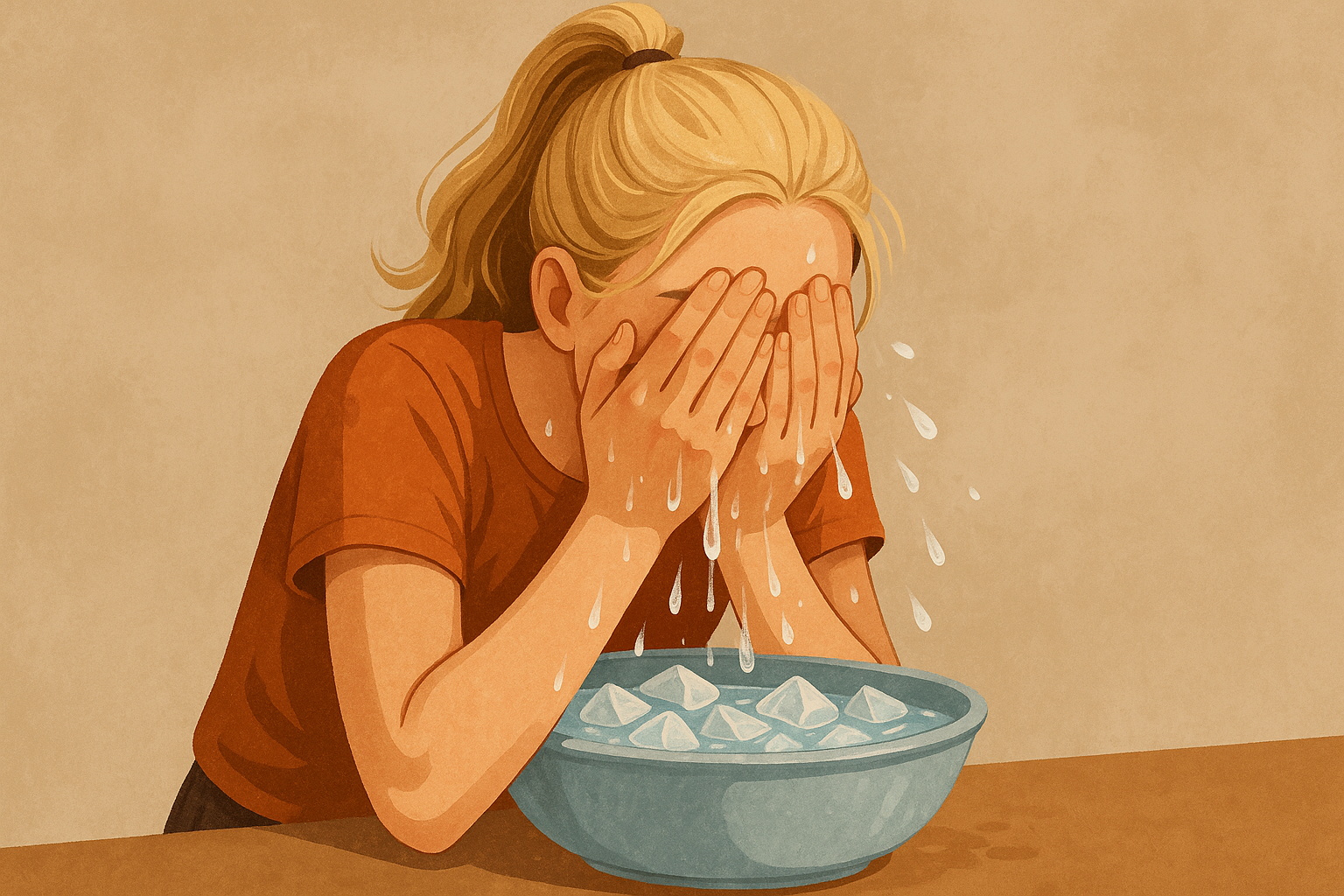
- Prepare safely. Sit down. Have a bowl with cold water and a few ice cubes (not painfully icy), a small towel, or a wrapped cold pack. If using water, aim for cool-to-cold, not extreme. Keep sessions short.
- Settle and assess. Soften your shoulders and jaw. Take an easy breath and decide which option you’ll use. If you notice any dizziness, chest pain, or strong discomfort at any point, stop and breathe normally.
- Option A — Face immersion (most effective). Take a normal inhale, hold your breath gently, and lean forward to submerge your face (forehead, eyes, and cheeks) in the cold water. Stay 15–30 seconds or until you feel a clear urge to breathe. Rise, exhale slowly, and rest 30–60 seconds. Repeat up to 2–3 times if helpful.
- Option B — Cold pack placement. Wrap an ice pack or a bag of cold water in a thin cloth (moisten the cloth where it touches your face). Place it over the eyes and upper cheeks for 30–60 seconds while leaning slightly forward. You may add a brief, gentle breath hold if it feels safe.
- Option C — Cold splash. If immersion isn’t possible, splash cold water on the eyes and cheeks for 20–30 seconds. Lean forward slightly and finish with a long, steady exhale.
- Feel the shift. Notice any slowing in your heartbeat, lengthening of your exhale, and softening in your muscles. Name the change in a word or two (“steadier,” “cooler,” “quieter”).
- Follow through. Once arousal has dropped, choose a next step that supports your goals—try paced breathing, grounding in the senses, clarifying a small task, or reaching out for support.
Practice with Care
Avoid this practice if you have cardiovascular or heart rhythm problems, very low blood pressure, fainting history, cold urticaria or Raynaud’s, certain migraine or trigeminal nerve conditions, or if your clinician has advised against cold exposure or breath holds. Keep breath holds gentle and brief; do not exceed 30–60 seconds per round and remain seated. Skip extremely icy water; pain is a cue to stop. If you feel dizzy, short of breath, or unwell, stop immediately, breathe normally, and ground in your surroundings. Dive Reflex Reset is a short-term downshift tool; pair it with ongoing skills for stress management and consider consulting a qualified healthcare professional if intense distress persists.