About this practice
Mindful Breathing is a simple, portable practice that anchors attention in the sensations of breathing. Research on mindfulness shows that regular breath awareness can lower stress and physiological arousal, reduce rumination, and improve attention and emotion regulation by engaging the parasympathetic nervous system and strengthening interoceptive awareness. Because the breath is always available, this practice can be used almost anywhere to steady the mind and ease the body. Rather than trying to control your breathing, you learn to notice it as it is—feeling the gentle rise and fall, meeting distractions with curiosity, and returning to the present moment. With consistency, many people experience greater calm, mental clarity, and resilience throughout the day.
Instructions
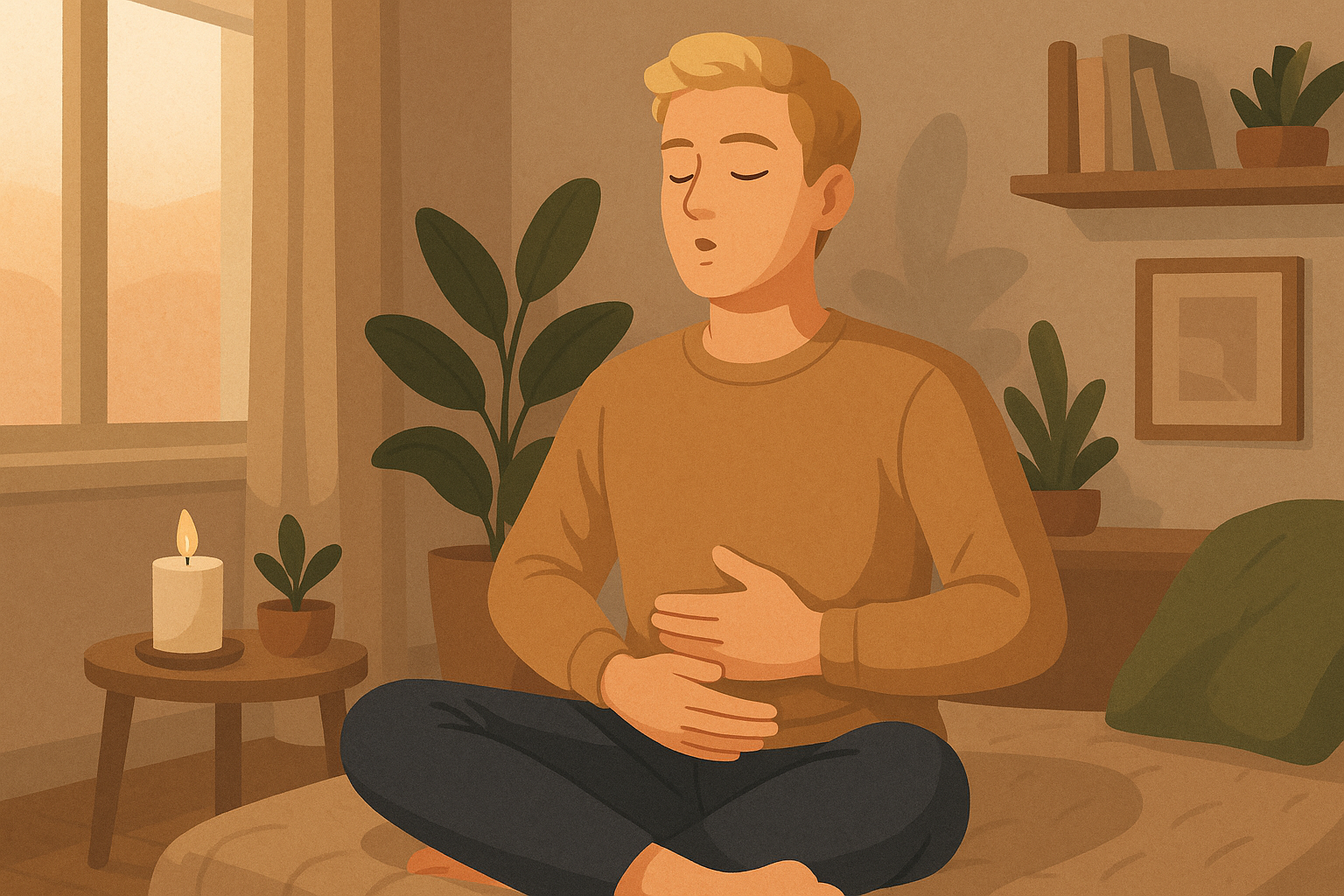
- Set your posture. Sit comfortably on a chair or cushion with an upright, relaxed spine. Place both feet on the floor if seated, or support your hips if on a cushion. Let the shoulders and jaw soften. Eyes can be closed or softly open.
- Feel contact points. Notice sensations where your body meets the surface—weight, pressure, warmth, or coolness. Let the body be supported.
- Choose your anchor. Place attention on the natural movement of the breath—at the belly, the lower ribs, or the air at the nostrils. No need to change anything.
- Let the breath be natural. Allow easy, quiet breathing through the nose if possible. Sense the full arc of each inhale and exhale, including the subtle pause between them.
- Notice details. Track the beginning, middle, and end of the breath; the slight expansion and release; any shifts in temperature or texture. Meet each sensation with gentle, nonjudgmental interest.
- Acknowledge distractions. When thoughts, emotions, or sounds pull you away, note it briefly—“thinking,” “planning,” “worry”—and kindly return to the breath. Each return is the core of the practice.
- Use light supports if helpful. You may count breaths from 1 to 10 and begin again, or quietly say “in” on the inhale and “out” on the exhale to steady attention. Keep it easy.
- Adjust and continue. If breath sensations feel faint or activating, widen your focus to include the whole body or your feet on the floor, then return to the breath when ready.
- Close with awareness. After 5–10 minutes (or longer if you like), release any counting, feel the body sitting, notice a few sounds and sights, and name one word for your state (“calmer,” “clearer,” “present”) before moving on.
Practice with Care
Aim for comfort and curiosity rather than perfect concentration. If you notice strain, sigh gently and let the next breath come on its own. If focusing on breath increases anxiety, keep eyes open, anchor in external sensations (feet, hands, sounds), or shorten the session. Dizziness or shortness of breath is a cue to pause and breathe naturally. This practice supports stress relief and emotional regulation but does not replace professional care; if distress persists, consider consulting a qualified mental health or healthcare professional. With regular, gentle practice—even a few minutes a day—you can build steadier attention, reduce reactivity, and cultivate everyday calm.